CyberSpy

Rantings from a guy with way too much free time

Program the Esp32 with ESP-IDF on Mac OS X

2019-01-23 Programming Rob Baruch

Programming the ESP32 on your Mac!

Go out and buy yourself a cheap little ESP32 SoC and follow these basic instructions to setup your development environment on your Mac. If you want to do some advanced C-programming to control your ESP32, this is for you. If you’d rather use Arduino and play with simple sketches then this is not for you – google how to use Arduino and off you go!

What you will need

So, of course you’ll need an ESP32 SoC development board. I recommend the SparkFun Thing. Lots of other choices, but this blog post will address some of the specific configuration considerations that you’ll need to be aware of when you select this particular device.

Continue reading
Using Gqrx with USRP SDR's and DSD voice decoding on Mac OS X without losing your mind

2018-12-19 Sdr

The Problem: Homebrew formula is a rotten Brew!

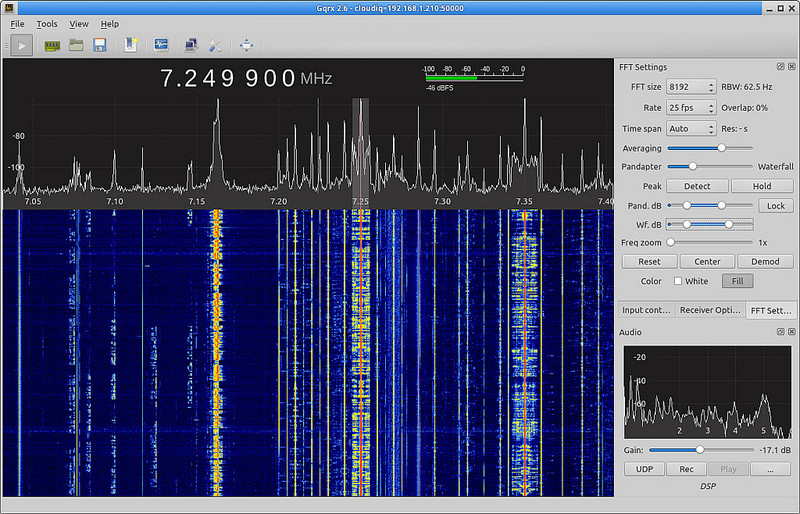
Over the last few years, using the gqrx package was as simple as using homebrew. However, over late, the keepers of the brew formula hasn’t maintained the build with the most recent gr-osmosdr and Ettus Research UHD Library. So rather than depend on the brew formula, go grab the source and build your own version guaranteed to be up-to-date – and working on your USRP device!

Grab the source

So, the latest source (as of this writing 2.11.5) is available on the gqrx download section of their website.

Continue reading

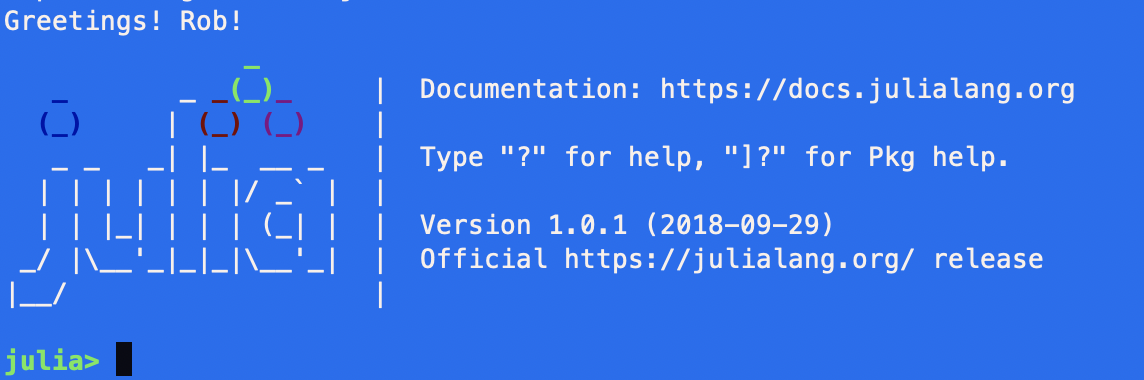
Julia Intro

2018-11-07 Programming

Juliaet, Wherefore art thou?

As Yoda once said…

> YAPL - yet another programming language. Learn something new, you must.

Why Learn Julia?

Julia was designed from the beginning for high performance. Julia programs compile to efficient native code for multiple platforms via LLVM. As such, it’s an interesting programming language to take a look at as it’s a serious contender for certain classes of programming problems; most notibly, scientific and data-centric analysis.

Continue reading

Ramnode

2018-11-07 Devops Robert Baruch

Drowning in the Digital Ocean

Not all services are created equal - you get what you pay for.

I got tired of paying Digital Ocean for a crappy service so I decided to hunt around for a no-frills service that give me a basic instance worthy of hosting a simple blog. Enter ramnode.

Ramnode

Ramnode is a basic service that quickly affords the addition of new VPS (virtual private servers) at a whopping $3/month per server. At such a cheap price, I’m giddy to add as many as I can think of!!!

Continue reading

Making some Noise - Teensy, TGA-Pro, and MIDI

2018-05-04 Programming Rob Baruch

Making Some Noise (and maybe even Music)!

In this blog post, I’ll share my experiences using the Teensy and TGA-Pro Guitar Audio Shield to process audio - both using an audio processing codec as well as MIDI. I’ve also included the Yamaha UX16 USB-to-MIDI controller to aid in patching my MIDI channels into the inputs of the Guitar Audio shield.

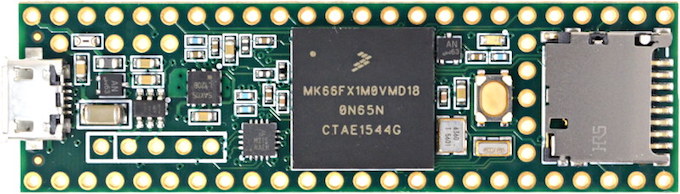
Teensy - Yet antother cheap USB uController board.

At the hear of this project is the Teensy 3.6 USB Microcontroller development board. This sub-$30 board is a feature-rich micro-controller using the Cortex M4, floating-point unit, digital and analog pins, and lots of communication protocols (USB, i2C, SPI, Serial, Ethernet). What makes this little USB-attached board so useful are the accompanying software elements:

Continue reading

Pathocaml - Getting Wacky with Functions And Polymorphism

2018-03-19 Programming Rob Baruch

OCaml on the Fringes - You can do that??

So, I got bored this afternoon and was contemplating why I was enjoying diving into OCaml more than say Elixir/Erlang for functional programming. The quality of the language that’s most captured my attention is the type system.

When you start playing around with the type system in OCaml you can go from some basic definitions of user-defined types to some pretty cool looking constructs. Let’s start of with something pretty transparent and move into something that might actually melt your brain.

Continue reading

OCaml OpenGL - Get into Gear!

2018-03-13 Programming Rob Baruch

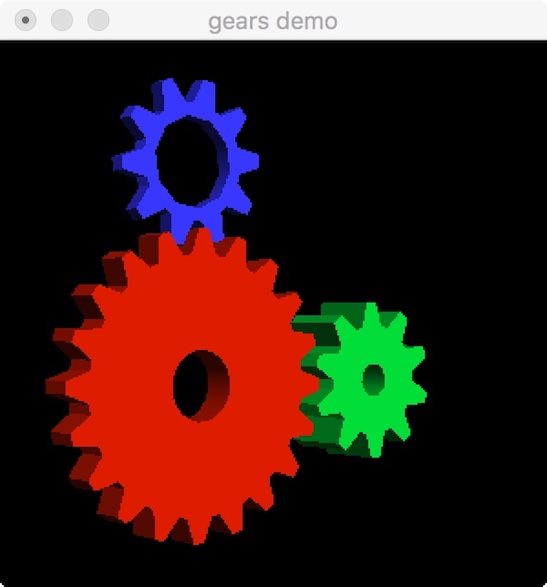
OCaml and OpenGL - Getting our Functional Programming into Gear!

In my blog post for this day, I thought I’d take a look at the OCaml OpenGL library, lablgl. If you’re not already familair with openGL, I strongly suggest that you take a look at one of the tutorials available online. One that I found to be very informative; although written in c++, is opengl-tutorial. Nonetheless, in this post, we’ll look at some simple, and not so simple examples written in OCaml. But before we can do that, we need to install the requisite opam dependencies. To install lablgl, simply:

Continue reading
Older posts Newer posts