CyberSpy

Rantings from a guy with way too much free time
The soundcloud player can not be loaded with disabled JavaScript.
The following title is embedded here:
https://soundcloud.com/user-338167339/sabreras-etude-11-book-2

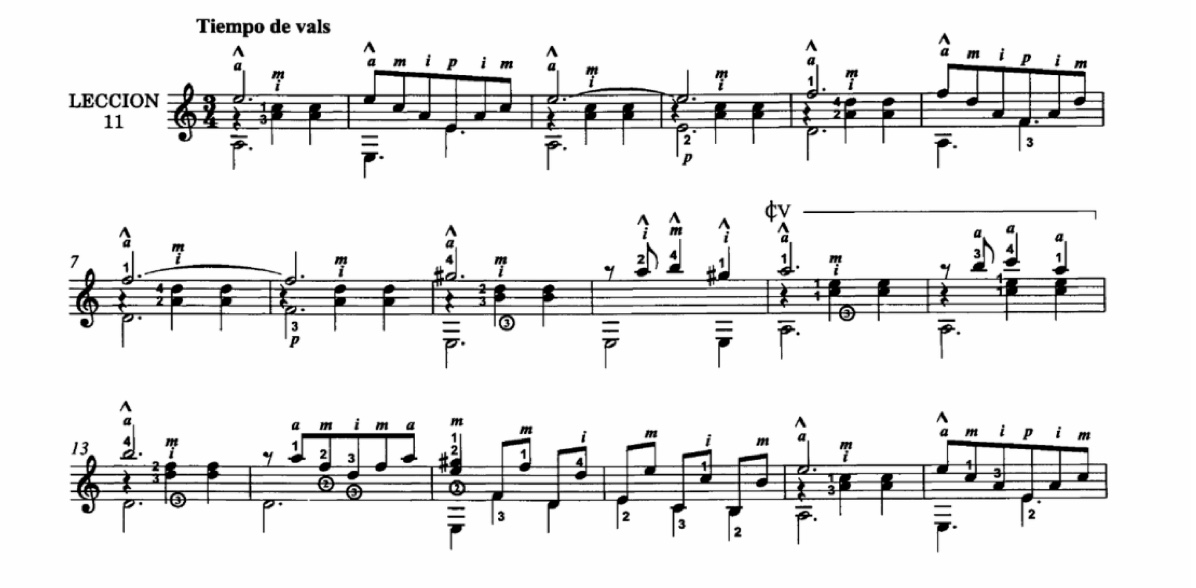
Sagreras Book 2, Lesson 11

2017-11-28 Music Etudes Rob Baruch

Etude Sagreras Lesson 11

Here’s my first cut at recording Sagreras Etude #11. Although the etude feels like it’s easy to play, recording it reveals an altogether unsatisfying experience when played back to the ear.

My goal is to show how the exercise evolves over time when practicing it with the intention of not just playing it as a site-reading piece, but rather practicing it with the intention of recording it with more attention beyond mere site-reading. Wish me luck!

The soundcloud player can not be loaded with disabled JavaScript.
The following title is embedded here:
https://soundcloud.com/user-338167339/bach

Julio Salvador Sagreras

2017-11-28 Music Guitar Rob Baruch

Études

Someone once asked…

How do you get to Carnegie Hall? Practice! Practice! Practice!

Well, I think the Amtrak is a better way for me to get there at this point in my life!

I’ve decided to spend time recording Sagreras etudes as I’m on a push to finish Book II and start Book III by March of 2018.

Stay tuned for

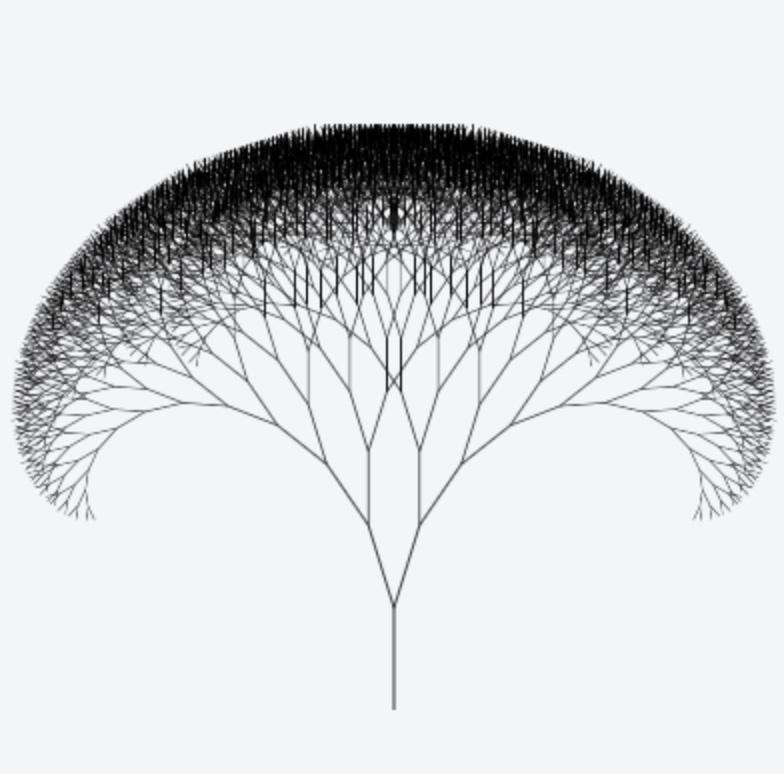
Recursion Revisited

Recursion, from more than one point-of-view.

A common programming idiom in computer science is solving a problem by self-reference, also known as recursion. In this post, we look at two different implementations of the same problem.

Solve a recursive problem in two different programming language paradigms

Let’s look at the solution to a simple problem, compute $f(x)=e^{x}$.

We will illustrate two separate solutions - one in a procedural language (python), and the other in a functional language (elixir).

Let’s start off with the functional language. Were does recursion come into play?

We define the function $f(x)=e^x$ as the infinite sum, $\text{ }f(x) = \sum_{n=0}^\infty{\frac{x^n}{n!}}$

In our solution below, we define two separate recursive functions, exp/2 and fac/1. What’s interesting to note here is how each of these functions has two separate definitions. This is an aspect of programming in elixir that elegantly uses pattern-matching to return different results depending upon the input. Our two functions nicely dovetail into the base-case and recursive case of a recursive algorithm.

For example, looking at exp/2, the first function definition returns 1 for any value of x (as indicated by the _ preceding the variable) and returns 1. This is the mathematical equivalent of $x^0=1\text{ for any }x$.

The second definition of exp/2 is the recursive case. for any value of $n\gt0$. Moreover, we define exp(x, n) as $\frac{e^x}{n!}$ + exp(x, n-1).

Similarly for the definition of fac/1 we see two definitions; one for $n=0$ and another for all values of $n\gt0$.

Continue reading
The YouTube player can not be loaded with disabled JavaScript.
The following video is embedded here:
https://youtube.com/watch?v=5woVpVF0Bzs

Great Tonne!

2017-11-21 Video Music Guitar

This dude can rock the classical guitar with a ton of attitude (and four extra strings)!

Check out Estas Tonne, a classical guitar player that inspires all of us would-be bad-ass guitar players, acoustic or classical.

If you liked that, you’ll love this!

The YouTube player can not be loaded with disabled JavaScript.
The following video is embedded here:
https://youtube.com/watch?v=9Kr96p3TXvw

Lets Get Together

2017-11-21 Video Music Guitar

A favorite from Rev. Gary Davis!

Here’s a video of me playing Let’s Get Together on guitar - made over three years ago. I thought I’d see what the video looks like here ony Cyberspy.

I may have to make more recordings and put them on the blog when I’m not busy writing code.

-- more to come!

Brew up some Elixir recursion

2017-11-17 Programming

Recursion is recursion is recursion is recursion….

So how hard is it to go back to a programming language that you haven’t used for months that you only used for less than a year? Well, it took me a few more minutes than I anticipated, but in the end, I was succesful!

Tonight, I thought I’d take the simple idea of creating Pascal’s Triangle. A simple construction that creates a table of binomial coefficients for the binomial $(x+y)^n = x^4+4x^3y+6x^2y^2+4xy^3+y^4$. Notice the coefficients in our expanded binomial:

Continue reading

Visualizing the News: Grab your PILlow

2017-11-12 Python Programming

A Picture’s Worth a Gazillion Bits

newsapi

This weekend, I tripped over a neat news REST-ful api called newsapi. Grab an API key and you’re off to the races.

There are tons of live headlines - News API can provide headlines from 70 worldwide sources.

There are basically two api endpoints:

Register for an account and generate an api-key and let’s get started.

Accessing the API with Python

newsapi can easily be accessed using a browser since the REST-ful method used is a GET method. But, accessing the api from the browser is limiting.

Continue reading
Older posts Newer posts